Be yourself; Everyone else is already taken.
— Oscar Wilde.
This is the first post on my new blog. I’m just getting this new blog going, so stay tuned for more. Subscribe below to get notified when I post new updates.
Great Teachers never cease to learn
Be yourself; Everyone else is already taken.
— Oscar Wilde.
This is the first post on my new blog. I’m just getting this new blog going, so stay tuned for more. Subscribe below to get notified when I post new updates.
I have said before that I draw plenty of energy from the lessons kids teach. That includes my son.
I don’t think I am unique to lay platitudes onto my son. That’s what parents [should] do! Although I have more compelling reasons to celebrate my son; his deeds and words never cease to amaze me!
Recently, my son made twelve years on this planet, with more life experiences than I had at that age. By his fifth birthday, he’d already been to nine countries. In second grade, he initiated a kids’ nature conservation group, Kids Earth Patrol, where he mobilizes his peers to clean our neighborhood natural resources. In third grade, he turned his passion for illustrating comics into a thriving business selling hand-drawn comics. He has been elected twice to his school student government, the only student in his school to hold the same office two years in a row, through competitive electoral campaigns! He is also an ardent Scratcher [thanks MIT]!
I am even more proud of my son as a Social Justice Warrior! I should have known, when I chose to name him *Biko,* after the renowned South African freedom fighter, and leader of the Black Consciousness Movement, Steve Biko. No known relationship, whatsoever! Although, three years before he was born, his mom met Steve Biko’s son, Nkosinathi Biko while on a visit to South Africa. That visit did not come to mind when I chose his name. I just wanted a name with African roots, which would also easily slide off the “linguistically-challenged American tongues.”
At his tender age, my son is using his platform to promote social justice — protecting the planet, standing up for justice, support to those who may be shunned by the majority, or speaking truth to power.
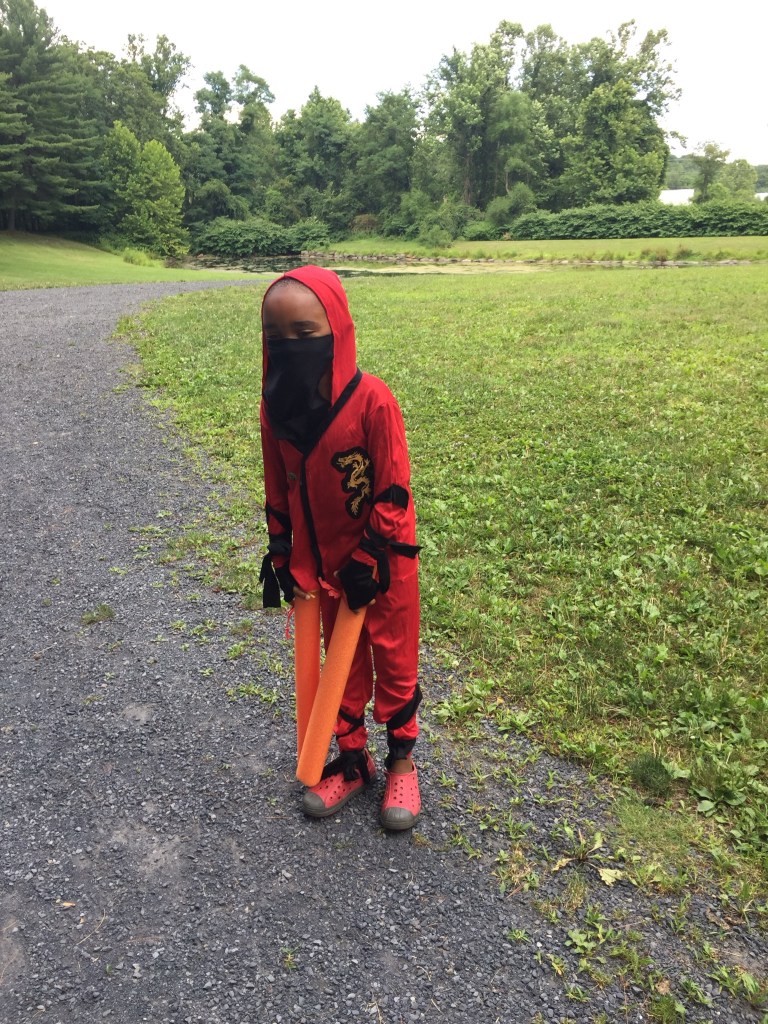
In third grade, he came home and told me about one of his classmates who was shunned by his peers and teachers because he was “getting into other people’s space.” So, my son showed me the “Behavioral Chart” he created for his peer with “rewards” and “incentives.” He discussed it with him, “Every time I see you doing something great, I will reward you with a check on your chart.” Why? To encourage him to commit to desirable behavior. I was dumbfounded and proud!
As a special educator/early childhood educator, I learned about creating “Behavioral Plans,” with rewards and incentives from my professors. My eight-year-old third grader produced one on his own, becoming an ally of peers with special needs. He understood, unlike his classmates and teachers that his buddy had attention challenges because his brain was processing ahead of his age and grade assignment. Even though his peer did not return to school the following year, they remain good friends to date!
So, when the need to proclaim that Black Lives Matter became urgent, he heeded the call to action. Joining the recent global protest and outcry against police brutalization of black people in the United States. Without my instigation, my son used his platforms to defend black lives and enjoined his peers to become allies in the struggle. I found out that he was engaging his community or creative coders. He started a thread about “Black Lives Matter” on his Scratch Account, enjoining his “scratch community” to express their views on police brutality against black people. He engaged with those who posted, in support or opposition. He explained to those who said All Lives Matter, that the urgency right now is to focus on black lives reeling from the hands of law enforcement. He employed messages from media images, videos, and articles we had turned for information on the protests. Truly admirable, and surprising, since I did not think Scratchers had that kind of platform!
Recently, at a party with his friends, he found himself standing up for black lives, again. When one of his peers said “the whole Black Lives Matter movement was stupid because “all lives matter,” he put on a spirited defense of the movement. Being the lone black voice at the table did not deter him from standing up for his beliefs. Yes, he was frustrated with the mindset around the table. He went to the bathroom to cry off his anger, then collected his emotions, and boldly returned to do the work of a social justice warrior. Defending why we need justice for black people in America. That, it was not “just one single black person killed by the police,” as a peer suggested. He read off a list of more black people brutalized without justice or accountability.
Another peer suggested that “they [protestors] just want a chance to ruin property.” He defended all the other black people who were not involved in “vandalism,” “destruction of property,” or “mischief,” but still lost their lives to police brutality. He reminded a peer focused on highlighting that George Floyd “used a counterfeit $20 bill, and had a troubled past,” that he had turned his life around. Still, “nobody deserves to die just because they are using counterfeit money.”
They say the apple doesn’t fall far from the tree. Indeed this is my apple, and I am super-proud! I have spent most of my life standing up for equality, fairness, and justice. Defending those who denied a voice – prisoners, refugees, breastfeeding mothers in detention, racial, ethnic, linguistic, ability minorities. Confronting those silent to injustice.
Following the murder of George Floyd and resulting protests, I waited for my community of friends or membership organizations to express their support for us and show us that we matter. When nobody turned their voices on, I called out our school, the Boy Scouts of America, and the honor societies to which I belong.
If we are going to entrust our children with predominantly white institutions, which is most of America’s education and youth organizations, then they need to make us feel that we all belong,. Reassure us that they grieve with us, and have our backs and our front, whenever we need them. That is what my son was fighting for, and so was I. He was not afraid to become unpopular, by choosing to stand up for what is right. He has a greater purpose, illustrated in these words of Nelson Mandela:
“I learned that courage was not the absence of fear, but the triumph over it. The brave man is not he who does not feel afraid, but he who conquers that fear.”
I would love for my son to approach his 12 years on earth eagerly awaiting full enjoyment: planning where to celebrate, anticipating surprising birthday gifts, and compiling his a guest list for his party. But that is not his reality, as a black male growing up in the United States.
He’s not afforded the same childhood innocence that his peers enjoy, simply because of the color of his skin.
So, if he chooses to spend his 12th birthday making sure that people like him receive equal treatment by law enforcement. Urging on his peers to confront their privilege of dismissing that, “Black Lives Matter! Envious that a black man is “made so famous by a movement,” even when that man [George Floyd] no longer has the luxury of still breathing. If we are still oblivious to the power of When Kids Teach, I am proud to say that, mine is proof that they are unafraid to be Social Justice Warrior!
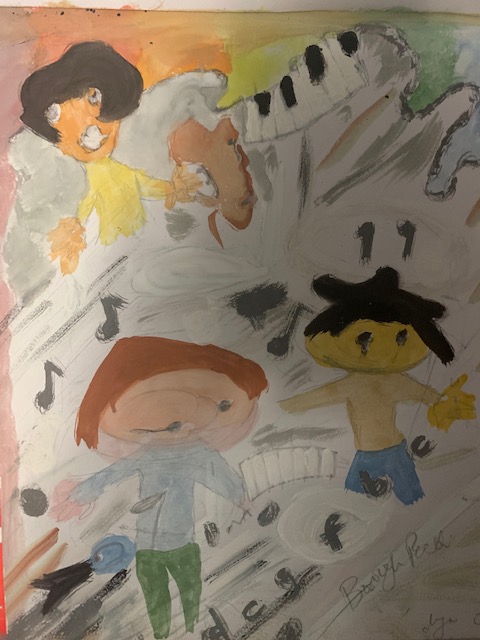
“When Kids Teach!” is not a cliche! It is a summation of my perspective on children. Kids are expert teachers when given the platform and trust. Based on childhood experiences, and as an educator, supervisor, mentor, aunt, a mother, sister, and several other ways that I find myself with kids.
As a constructivist, I believe that children have an inert ability to construct their beliefs and knowledge, based on lived experiences, and observations of their environment. Children do not come into this world as “blank slates” or tabula rasa, that English philosopher, John Locke, once posited. A rebuttal from renowned constructivist philosopher, Jean Piaget emphasizes that children are not “empty vessels,” to be filled with knowledge. They possess inert cognitive abilities to engage and construct knowledge. Their actions, thoughts, reasoning, and interactions contribute our knowledge about child development, how we engage with them, and the problem-solving skills we apply to working with children.
Constructivism is the philosophical explanation of why I am a learner-centered teacher. Student-teacher roles are interchangeable during the learning process, where children valued as facilitators of learning. Adults do not always have to teach children. We learn when we let kids teach themselves, teach their peers, or teach adults. Then, we can nurture the flow of insightful thinking, problem-solving strategies, and depositories of knowledge. Resources that we can tap to engage and explore their abilities, talents, needs, and strengths. Through continued observation and scaffolding, we enable children to discover and generate new knowledge to become better teachers of themselves, and us.
Reflecting on my work with children brings back childhood memories of learning a lot from children as peers and older siblings. For instance, the games I played, the tasks I undertook, and the lessons, songs, and “truths” that I absorbed. Playing hopscotch and dodgeball with peers, observing my older siblings complete house chores; and walking to school and back home with my brother. I learned to swim ashore, through waters above my head from my older cousins. Even the mischiefs I learned as a child, came from watching other kids. I practiced lessons learned, became skillful, and taught my peers, nieces, and nephews.
I am not implying that I learned nothing from the adult in my life –my mother, my father, my teachers, and my community leaders–were all important teachers in my life. I seek to highlight the creativity, knowledge, and intellect of children.
Think for a minute. As babies, we decide when it is time to push out of our mothers’ bellies. While growing inside the womb, we ingest part of the foods our mothers eat. We kick, twist, and turn inside the womb until that moment comes to break loose. Then, we slide ourselves to the birth canal and zoom into this world, with “a little” push from our mothers, medication, or surgical tools.
Nobody teaches babies how to cry, or suckle breastmilk, the moment they drop on this planet. Most babies crawl on their own, lift their heads, and smile into this world. They communicate when we are hungry, wet, hot, restless, or sleep. Sometimes, adults rely on babies’ cues to respond to their needs appropriately.
Educators are privileged to learn from children by observing and engaging them in their learning environment. We ask about their interests, families, friends, and their favorite food, we can collect useful information to help us meet their needs. Observing behavioral changes among children teaches us to detect when they need a break, more challenging activites, or a change of environment. Indeed, children teach us to become better educators.
Parents of young children learn from them, as well. Parents who are teachers, have the added opportunity of contextualizing their children’s behaviors, interests and needs with those of their similar-age students. Paying hile still paying attention to his individuality. He let me train and run a marathon in my first trimester with no complications. He let me carry him on my world travels, finally releasing him into this world, without pain medication. Now as a tween, almost a teenager, the lessons I have learned from him are insurmountable! I will “tell-it-all” in another blog.
I treasure opportunities to learn with and from kids, as a mother, a teacher, and an adult relative and mentor. Readily engaging their creativity, resilience and innovative minds, as a teacher. Most importantly, I am excited to nurture their intellectual growth emotions, and excitements. So, let’s pay attention When Kids Teach!
As part of my Professional Development Studies (PDS) II, or Primary II placement with an area elementary school, I had to designed an “Advocacy Project” benefiting the school.

As part of my Professional Development Studies (PDS) II, or Primary II placement with an area elementary school, I had to designed an “Advocacy Project” benefiting the school.
I proposed a “SnackRaiser” for the kids, after observing my mentor teacher several times buying snack for the kids. If you did not know, teachers spend their own money furnishing their classrooms, and feeding their students. They do not want other kids, who do not bring snack from home, sitting around, watching their peers eat snack. Not every parent can afford to buy a snack, or remembers to pack one.
In collaboration with another PDS II student at the same school, my mentor teacher, and field liaison coordinator, we agreed on the “SnackRaiser.” We went about collecting snacks from area grocery stores, within our college campus, and personal contacts. My colleague secured a HUGE, I mean HUUUUGE! contribution from the company that provides dinning services on our college campus.
Of course, I had to recruit my son, who is the “fundraising guru!” He wrote to his Boy Scouts Patrol, and his school (Ps. My son goes to a private school, so we were not taking donations from other public school kids:-). He came through, his school and Scouting community came through!
Lesson learned: 1) Kids are a resource to enrich our own learning, and advocacy initiatives. Even our own children, who are still under our wings have so many abilities that we can highlight by engaging them in community service. 2) Kids in school have needs beyond academic learning, and socializing. Their nutritional and health needs should always be taken into consideration, in promoting their psychosocial and cognitive well-being. 3) One does not have to be a parent to be attuned to the needs of children. My teacher’s care and concern for her students goes beyond imparting academic knowledge. Although not a mother herself, she is absolutely attuned to her students needs and comfort!
This is an example post, originally published as part of Blogging University. Enroll in one of our ten programs, and start your blog right.
You’re going to publish a post today. Don’t worry about how your blog looks. Don’t worry if you haven’t given it a name yet, or you’re feeling overwhelmed. Just click the “New Post” button, and tell us why you’re here.
Why do this?
The post can be short or long, a personal intro to your life or a bloggy mission statement, a manifesto for the future or a simple outline of your the types of things you hope to publish.
To help you get started, here are a few questions:
You’re not locked into any of this; one of the wonderful things about blogs is how they constantly evolve as we learn, grow, and interact with one another — but it’s good to know where and why you started, and articulating your goals may just give you a few other post ideas.
Can’t think how to get started? Just write the first thing that pops into your head. Anne Lamott, author of a book on writing we love, says that you need to give yourself permission to write a “crappy first draft”. Anne makes a great point — just start writing, and worry about editing it later.
When you’re ready to publish, give your post three to five tags that describe your blog’s focus — writing, photography, fiction, parenting, food, cars, movies, sports, whatever. These tags will help others who care about your topics find you in the Reader. Make sure one of the tags is “zerotohero,” so other new bloggers can find you, too.
Have a WordPress.com account? Log in now.

