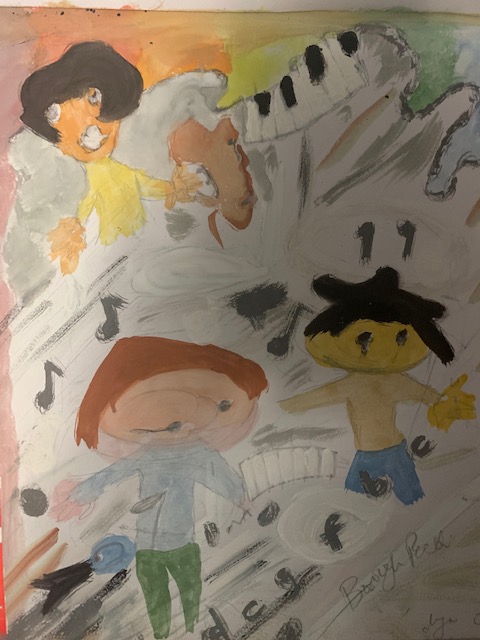
“When Kids Teach!” is not a cliche! It is a summation of my perspective on children. Kids are expert teachers when given the platform and trust. Based on childhood experiences, and as an educator, supervisor, mentor, aunt, a mother, sister, and several other ways that I find myself with kids.
As a constructivist, I believe that children have an inert ability to construct their beliefs and knowledge, based on lived experiences, and observations of their environment. Children do not come into this world as “blank slates” or tabula rasa, that English philosopher, John Locke, once posited. A rebuttal from renowned constructivist philosopher, Jean Piaget emphasizes that children are not “empty vessels,” to be filled with knowledge. They possess inert cognitive abilities to engage and construct knowledge. Their actions, thoughts, reasoning, and interactions contribute our knowledge about child development, how we engage with them, and the problem-solving skills we apply to working with children.
Constructivism is the philosophical explanation of why I am a learner-centered teacher. Student-teacher roles are interchangeable during the learning process, where children valued as facilitators of learning. Adults do not always have to teach children. We learn when we let kids teach themselves, teach their peers, or teach adults. Then, we can nurture the flow of insightful thinking, problem-solving strategies, and depositories of knowledge. Resources that we can tap to engage and explore their abilities, talents, needs, and strengths. Through continued observation and scaffolding, we enable children to discover and generate new knowledge to become better teachers of themselves, and us.
Reflecting on my work with children brings back childhood memories of learning a lot from children as peers and older siblings. For instance, the games I played, the tasks I undertook, and the lessons, songs, and “truths” that I absorbed. Playing hopscotch and dodgeball with peers, observing my older siblings complete house chores; and walking to school and back home with my brother. I learned to swim ashore, through waters above my head from my older cousins. Even the mischiefs I learned as a child, came from watching other kids. I practiced lessons learned, became skillful, and taught my peers, nieces, and nephews.
I am not implying that I learned nothing from the adult in my life –my mother, my father, my teachers, and my community leaders–were all important teachers in my life. I seek to highlight the creativity, knowledge, and intellect of children.
Think for a minute. As babies, we decide when it is time to push out of our mothers’ bellies. While growing inside the womb, we ingest part of the foods our mothers eat. We kick, twist, and turn inside the womb until that moment comes to break loose. Then, we slide ourselves to the birth canal and zoom into this world, with “a little” push from our mothers, medication, or surgical tools.
Nobody teaches babies how to cry, or suckle breastmilk, the moment they drop on this planet. Most babies crawl on their own, lift their heads, and smile into this world. They communicate when we are hungry, wet, hot, restless, or sleep. Sometimes, adults rely on babies’ cues to respond to their needs appropriately.
Educators are privileged to learn from children by observing and engaging them in their learning environment. We ask about their interests, families, friends, and their favorite food, we can collect useful information to help us meet their needs. Observing behavioral changes among children teaches us to detect when they need a break, more challenging activites, or a change of environment. Indeed, children teach us to become better educators.
Parents of young children learn from them, as well. Parents who are teachers, have the added opportunity of contextualizing their children’s behaviors, interests and needs with those of their similar-age students. Paying hile still paying attention to his individuality. He let me train and run a marathon in my first trimester with no complications. He let me carry him on my world travels, finally releasing him into this world, without pain medication. Now as a tween, almost a teenager, the lessons I have learned from him are insurmountable! I will “tell-it-all” in another blog.
I treasure opportunities to learn with and from kids, as a mother, a teacher, and an adult relative and mentor. Readily engaging their creativity, resilience and innovative minds, as a teacher. Most importantly, I am excited to nurture their intellectual growth emotions, and excitements. So, let’s pay attention When Kids Teach!
 When Kids Teach